Questions
Frequently Asked Questions About EPDM Rubber Roofing
The questions below come up most often from Hillingdon homeowners, landlords and businesses.
What is EPDM rubber roofing?
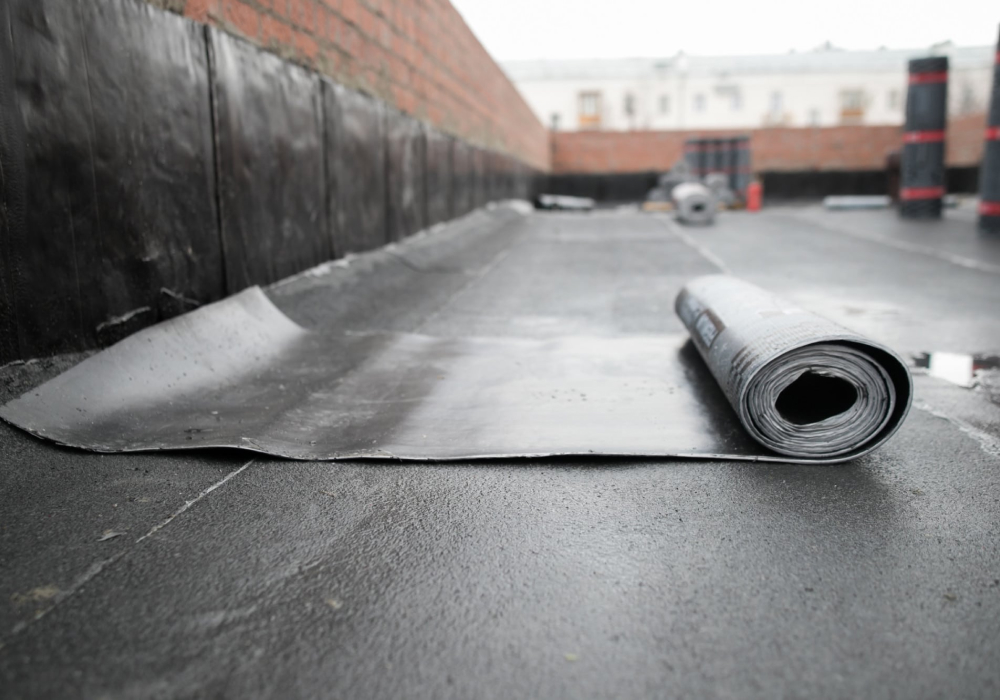
EPDM stands for ethylene propylene diene monomer, a synthetic rubber. As a roof covering it is a single-ply membrane bonded to the deck with contact adhesive. On most domestic flat roofs it goes down in one sheet, so there are few or no seams across the field to fail, and it stays flexible across a wide temperature range so it moves with the building instead of cracking.
What sort of roofs is EPDM used on?
Flat and low-pitch roofs: garages and outbuildings, single-storey extensions, dormer roofs and cheeks, bay window roofs, porches, balconies over living space and small commercial flat roofs. It is dressed in one piece around rooflight kerbs, upstands and wall abutments, which is where felt tends to fail.
Is EPDM better than felt?
For most flat roofs, yes. Built-up felt is laid in overlapping layers, so every lap is a potential leak, and it goes brittle in UV over time. EPDM on a domestic roof is usually a single sheet with few or no field laps, stays flexible, is stable in UV and ozone, and needs no torch or hot works to lay. Over a sound deck with proper falls it is low maintenance.
Do you have to replace the whole roof deck?
Not usually the whole deck. We strip the old covering, then cut out and renew only the boards that are soft or delaminated, commonly around the edges and the outlet. Where the roof ponds we add tapered firrings to correct the fall. A sound, dry, level deck is what makes the membrane last.
Can a leaking EPDM roof be repaired?
Usually, yes. Splits and punctures are cleaned, primed and patched with bonded EPDM, lifted trims and edges are re-secured, and upstands that have pulled off the wall are re-dressed. Ponding areas can be lifted locally, re-graded with firrings and re-bonded. If a membrane has genuinely reached the end of its life we will say so rather than patch it.
Why does my flat roof pond with water and does it matter?
Ponding means the roof was laid dead level or the firrings have sagged, so water sits in the low spots instead of draining to the outlet. It matters because standing water works at every weak point and shortens the life of any covering. We correct the falls with tapered firrings as part of a re-cover so the water clears.
Is EPDM installation messy or disruptive?
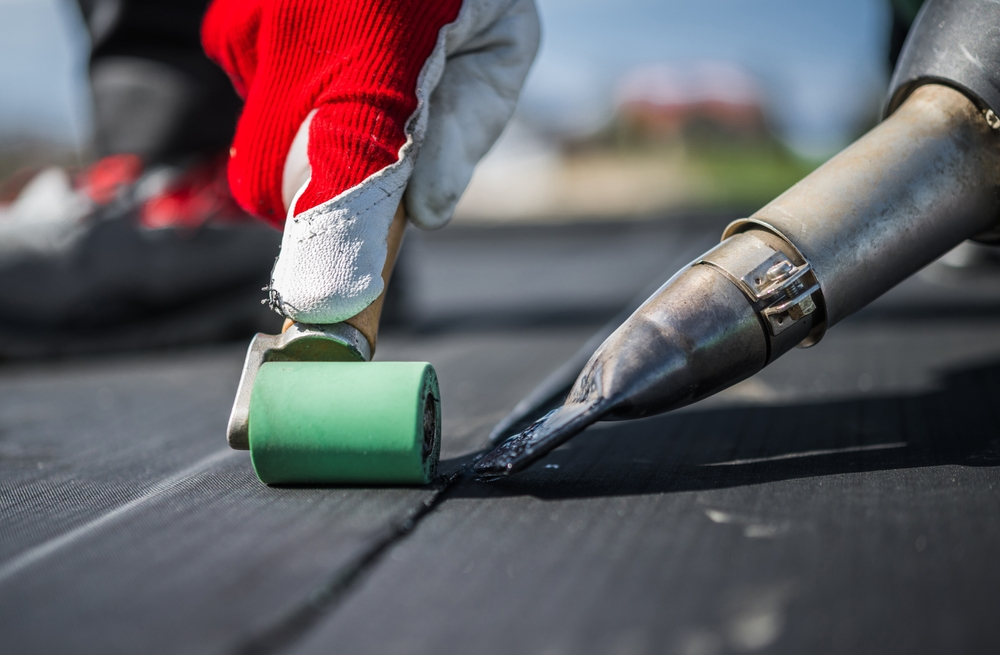
It is one of the cleaner flat roof systems to fit. There is no torch, no hot bitumen and no naked flame; the membrane is bonded with adhesive. Most garage and extension roofs are completed in a day or two once access is set up, weather permitting.
Can you walk on an EPDM roof?
For maintenance access, yes, an EPDM roof takes occasional foot traffic. For a roof that will be used as a balcony or terrace, we build in a walkway or paving support layer over the membrane so the surface is protected and safe to use regularly.
How does your quoting work for EPDM roofing?
We inspect the roof and the deck in person, then send a written quote covering deck repairs, membrane, trims, outlet, flashings and access. Where a repair is realistic we quote that too. All pricing is on request after that visit, because the deck condition, the roof size, the upstands and access are the biggest variables. We do not give figures without seeing the job.
Which areas do you cover for EPDM flat roofing?
We are based in Hayes and cover the whole London Borough of Hillingdon for EPDM rubber flat roofing, including Uxbridge, Hayes, Ruislip, Eastcote, Ickenham, Hillingdon village, Northwood, Yiewsley, West Drayton and Harefield, plus the bordering Buckinghamshire areas of Iver, Gerrards Cross and Stoke Poges. Call 07949 999411 to check your postcode.